Video Game Rating System Guide

Video games have evolved from simple pixelated entertainment into complex interactive experiences that can rival movies in scope, storytelling, and yes—mature content. Whether you're a parent trying to decide if a game is appropriate for your child or a gamer curious about what those letter symbols on the box actually mean, understanding the video game rating system helps you make informed decisions about what you play or what your family plays.
How Video Game Ratings Work in the United States
The Entertainment Software Rating Board (ESRB) handles how games are rated in the United States. Established in 1994 after congressional hearings about violent content in games like Mortal Kombat and Night Trap, the ESRB created a standardized system that the industry could rally behind.
Here's the actual process: Game publishers submit detailed questionnaires about their game's content, including the most extreme examples of violence, language, sexual content, substance use, and other potentially objectionable material. They also provide video footage showing this content in context—not just cutscenes, but actual gameplay.
At least three trained raters, who are adults and typically parents themselves, review this material independently. These raters don't play the full game; they evaluate the submitted content against established criteria. After reviewing everything, they recommend a rating and applicable content descriptors. The full Rating Board then reviews these recommendations and assigns the official rating.
One critical detail: ESRB ratings are technically voluntary. No federal law requires them. However, the system has achieved near-universal adoption because major retailers like Walmart, Target, and GameStop require ratings before they'll stock a game, and console manufacturers (Sony, Microsoft, Nintendo) require them before approving games for their platforms. This industry self-regulation has proven remarkably effective—more consistent than movie theater enforcement of film ratings, according to Federal Trade Commission studies.
When a game launches, publishers must display the rating prominently on packaging and in marketing materials. Digital storefronts like Steam, PlayStation Store, and Xbox Marketplace also display ratings before purchase.

Author: Megan Crosley;
Source: okogames.site
ESRB Rating Categories Explained
The ESRB uses seven rating categories, though you'll encounter some far more often than others.
Early Childhood (EC): Designed for children ages 3 and older. These games contain no inappropriate content whatsoever. You'll rarely see this rating because most developers targeting very young children now focus on mobile apps, which follow different rating systems. Classic examples include educational titles and simple puzzle games with no conflict.
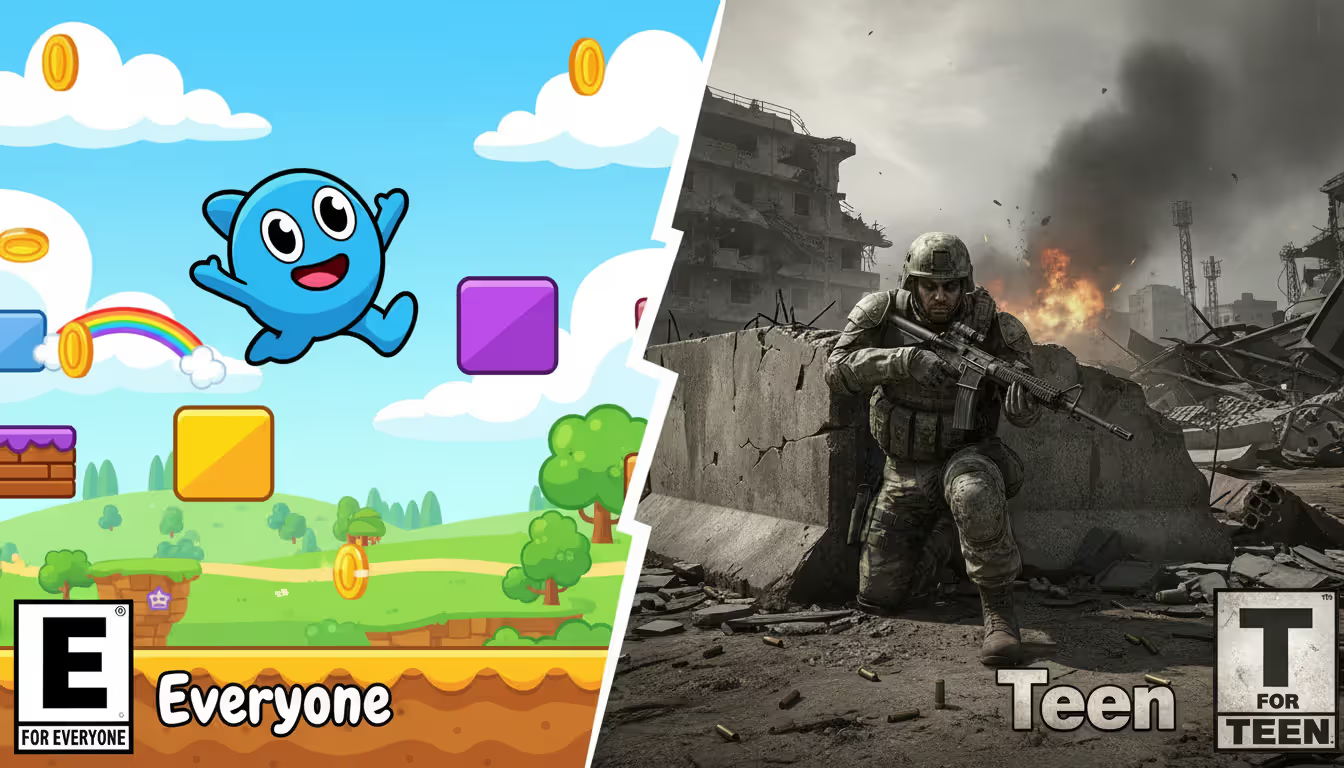
Everyone (E): Suitable for all ages. Games may contain minimal cartoon or fantasy violence and occasionally mild language. Think of franchises like Mario, Kirby, or most sports simulations. A character might get bonked on the head with comical sound effects, but there's no blood or realistic injury.
Everyone 10+ (E10+): Introduced in 2005 to fill a gap between E and T. These games may contain more cartoon or fantasy violence, mild language, or minimally suggestive themes. Many adventure games and action titles aimed at pre-teens fall here—games like Minecraft Dungeons or Splatoon, where the "violence" involves shooting ink at opponents rather than bullets.
Teen (T): Appropriate for ages 13 and older. Content may include violence (with some blood), suggestive themes, crude humor, minimal blood, simulated gambling, and infrequent strong language. Popular franchises like Halo, Fortnite (despite its cartoonish style), and most superhero games carry this rating.
Mature (M): For ages 17 and older. This is where you find intense violence, blood and gore, sexual content, nudity, and frequent strong language. Major franchises like Call of Duty, Grand Theft Auto, The Last of Us, and Resident Evil sit squarely in this category. Retailers typically require ID to purchase M-rated games, though enforcement varies by store.
Adults Only (AO): For ages 18 and older, reserved for games with prolonged graphic sexual content or extreme violence. This rating is essentially a commercial death sentence—major retailers won't stock AO games, and console manufacturers won't license them. You'll rarely encounter this rating; most publishers will edit content to achieve an M rating instead.
Rating Pending (RP): A placeholder used in pre-release marketing when the final rating hasn't been assigned yet. You'll see this in early trailers and at gaming conventions.
Everyone vs Teen Rating Differences
The jump from E to T represents the first significant content boundary parents need to understand. An E-rated game keeps violence abstract or comical—characters might disappear in a puff of smoke or bounce off obstacles. Language stays squeaky clean, and any conflict resolution happens without realistic consequences.
T-rated games introduce recognizable violence. Characters use weapons that resemble real firearms, swords leave visible wounds (though usually without excessive gore), and defeated enemies might collapse realistically rather than simply vanishing. You'll hear words like "damn" or "hell" occasionally, though F-bombs remain off-limits. Romantic relationships might be depicted with kissing or mild flirtation, but nothing explicitly sexual.
The practical difference: A 7-year-old might handle an E-rated platformer without issue, while a T-rated shooter could introduce concepts—even in a fantasy context—that require more maturity to process. The age recommendation of 13+ aligns roughly with when many developmental psychologists believe children can better distinguish fantasy violence from real-world consequences.
Author: Megan Crosley;
Source: okogames.site
What Makes a Game Rated Mature
Mature game rating criteria center on intensity and realism. Violence becomes graphic—blood sprays from wounds, bodies show realistic damage, and combat scenarios might depict torture or civilian casualties. First-person shooters often earn M ratings not just for violence but for realistic military scenarios that include disturbing imagery.
Sexual content crosses into partial nudity or implied sexual situations. A game doesn't need explicit sex scenes to earn an M rating; suggestive themes combined with partial nudity can push it over the line. Strong language becomes frequent rather than occasional—characters curse like actual soldiers, criminals, or people in extreme stress.
Substance use appears more realistically. Rather than a cartoony character drinking a potion, you might see characters using drugs or alcohol in ways that mirror real-world abuse. Gambling with real-world currency mechanics can also contribute to an M rating, particularly in games that simulate casino environments.
Context matters enormously. A game depicting wartime violence in a historical context might receive different consideration than one glorifying criminal violence against innocent civilians. The ESRB evaluates not just what content appears, but how it's presented and whether it serves a narrative purpose or exists purely for shock value.
Game Content Descriptors and What They Mean
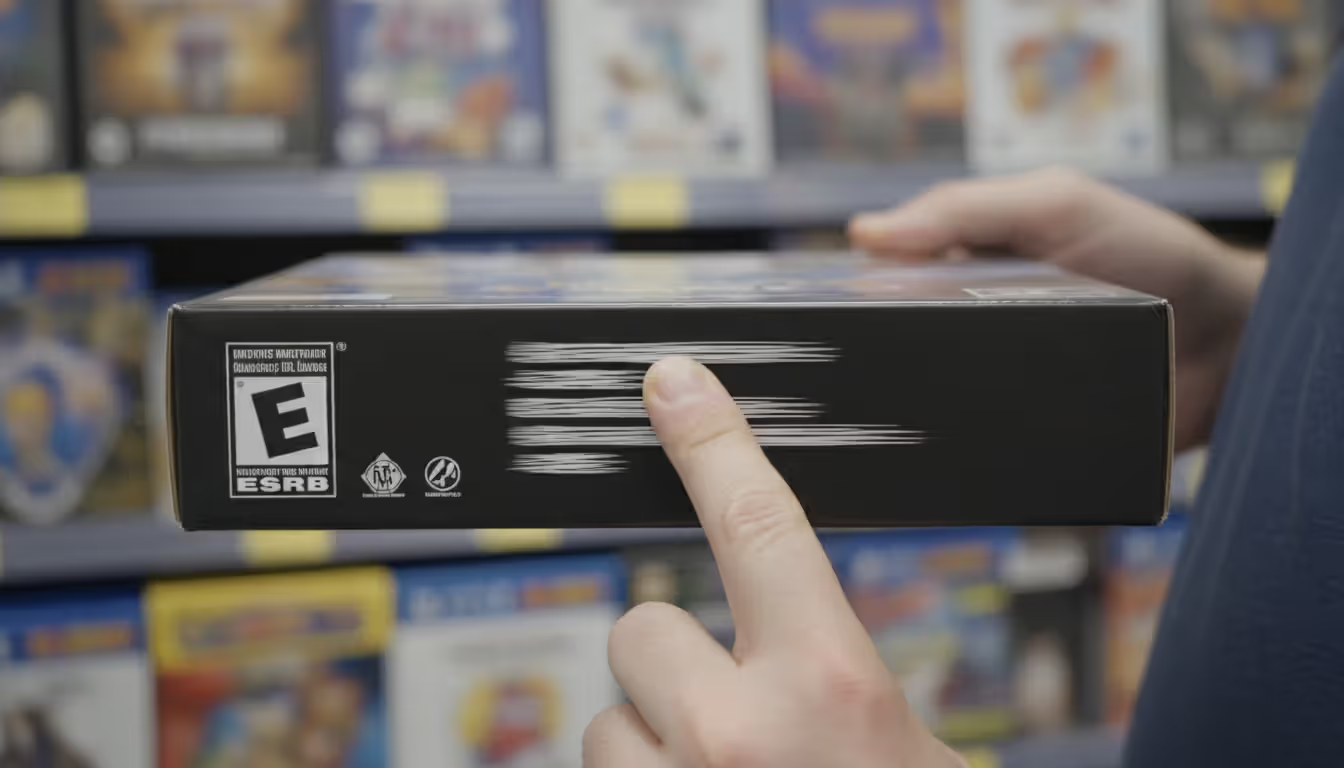
Ratings tell you the appropriate age; content descriptors explain why. These short phrases appear on the back of game packaging below the rating symbol, giving parents specific information about objectionable content.
Blood and Gore: The game depicts blood or mutilation of body parts. Gore specifically means dismemberment or exceptionally graphic violence.
Intense Violence: Graphic and realistic-looking depictions of physical conflict, potentially involving extreme or realistic blood, gore, weapons, and injuries.
Strong Language: Explicit profanity, including the F-word, appears regularly throughout the game.
Suggestive Themes: Mild provocative references or materials, often involving innuendo or implied sexual content without graphic depiction.
Sexual Content: Explicit depictions of sexual behavior, potentially including partial nudity.
Use of Drugs and Alcohol: The game depicts or references illegal drugs, alcohol, or tobacco, often showing characters consuming these substances.
Crude Humor: Jokes involving bodily functions, crude sexual references, or slapstick comedy that some might find distasteful.
Simulated Gambling: Players can gamble without betting real money, including casino-style games or loot boxes that mimic gambling mechanics.
In-Game Purchases: The game offers additional content for purchase with real money, including cosmetic items, expansion packs, or gameplay advantages. This descriptor has become increasingly important as microtransactions proliferate.
A single game might carry multiple descriptors. For instance, a T-rated game could include "Fantasy Violence," "Mild Blood," and "Crude Humor"—giving parents a complete picture. These descriptors help far more than the letter rating alone. Two M-rated games might differ dramatically: one might earn its rating through intense violence alone, while another combines moderate violence with sexual content and drug use. The descriptors clarify these distinctions.
Parents often overlook these descriptors, focusing only on the letter rating. That's a mistake. A parent comfortable with fantasy violence might draw the line at sexual content, or vice versa. The descriptors let you make decisions based on your family's specific values rather than a one-size-fits-all age recommendation.
Author: Megan Crosley;
Source: okogames.site
PEGI vs ESRB: Key Differences Between Rating Systems
While the ESRB dominates North America, Europe uses the Pan European Game Information (PEGI) system. If you've ever imported a game or noticed different rating symbols on international releases, you've encountered this divide.
| Feature | ESRB (North America) | PEGI (Europe) |
| Rating Categories | EC, E, E10+, T, M, AO | 3, 7, 12, 16, 18 |
| Age Thresholds | Descriptive (Everyone, Teen, Mature) | Numeric (specific ages) |
| Geographic Coverage | United States, Canada, Mexico | 38 European countries plus Israel |
| Enforcement | Voluntary industry self-regulation; strong retailer compliance | Legally enforceable in some countries (UK, Germany); voluntary in others |
| Content Descriptors | Text-based (e.g., "Blood and Gore") | Icon-based symbols (violence, bad language, fear, gambling, etc.) |
| Rater Background | Trained adults, typically parents | Gaming experts and child development specialists |
| Online Content | "Game experience may change during online play" disclaimer | Similar warnings; some countries regulate online interactions separately |
The systems align roughly but not perfectly. An ESRB T-rated game typically receives a PEGI 12 or 16, while ESRB M usually translates to PEGI 18. However, cultural differences affect specific decisions. European raters sometimes view violence more lenily than sexual content, while American raters historically showed the opposite tendency.
Why does this matter if you're a US gamer? Digital storefronts increasingly operate globally. You might purchase a game that displays PEGI ratings in screenshots or marketing materials. Understanding both systems prevents confusion. Additionally, imported physical copies—particularly for region-free systems like the Nintendo Switch—might carry only PEGI ratings.
Some countries maintain their own systems alongside PEGI. Germany's USK, Australia's ACB, and Japan's CERO all evaluate games independently, sometimes with stricter standards. A game rated M in the US might be banned outright in Germany if it contains certain Nazi imagery, or receive significant edits in Japan to comply with local content standards.
Why Age Ratings Matter for Games
Video game ratings serve multiple stakeholders, each with distinct interests that sometimes align and sometimes conflict.
For parents, ratings provide a quick reference point when shopping. Walking into a game store with a child who wants the latest popular title, you need immediate information about whether that game contains content you find appropriate. The rating system delivers that at a glance, with descriptors offering additional detail when you need it.
Children benefit from age-appropriate content that matches their developmental stage. A 7-year-old exposed to graphic violence might experience nightmares or anxiety, not because games "cause" violence (research consistently fails to establish that link), but because their emotional regulation systems aren't equipped to process intense imagery. Ratings help ensure kids encounter content they can handle.
The industry itself benefits enormously from self-regulation. The alternative—government-mandated content restrictions—would likely prove far more restrictive and inflexible. By establishing the ESRB, the gaming industry demonstrated it could police itself responsibly, heading off legislative intervention. This self-regulation allows creative freedom while maintaining public trust.
Parents need tools that are easy to use and understand. Our ratings don't make value judgments about whether violent or mature content is good or bad—they simply inform. A parent might decide an M-rated historical war game has educational value worth discussing with their 15-year-old, while another parent might wait until 17. The rating empowers that choice rather than dictating it.
— Patricia Vance
Retailers appreciate the clarity ratings provide. Store policies become straightforward: check ID for M-rated purchases, just like alcohol or R-rated movies. This protects them from criticism about selling inappropriate content to minors while avoiding the impossible task of having employees personally evaluate every game's content.
Critics argue the system isn't perfect. Some believe ratings are too lenient, particularly regarding violence. Others contend they're too strict about sexual content while giving violence a pass—a double standard that reflects American cultural attitudes more than objective harm assessment. The rise of online multiplayer introduces content the ESRB can't rate: other players' behavior, user-generated content, and live-service updates that change games after launch.
Despite these limitations, the rating system provides genuine value. FTC secret shopper surveys consistently show retailers enforce M-rated game sales restrictions more effectively than movie theaters enforce R-rated film restrictions or music stores enforce parental advisory labels. The system works because it's simple, visible, and backed by industry-wide adoption.

Author: Megan Crosley;
Source: okogames.site
Common Questions About Game Ratings (FAQ)
Understanding the video game rating system empowers you to make informed decisions about the games you or your family play. Whether you're a parent screening purchases for your children or a gamer curious about the process behind those letter symbols, knowing how games are rated, what the categories mean, and how descriptors clarify content helps you navigate an entertainment landscape that now rivals Hollywood in scope and complexity.
The system isn't perfect—no rating system can capture every parent's unique values or every child's individual maturity level. But it provides a solid foundation for decision-making, backed by consistent criteria and industry-wide adoption. Use the rating as a starting point, read the content descriptors carefully, and when in doubt, research specific games through reviews or gameplay videos. The tools exist to help you find age-appropriate entertainment; you just need to know how to use them.