Video Game Museum Guide

Video games have evolved from simple pixelated entertainment into a multi-billion dollar industry that shapes modern culture. Yet many groundbreaking titles, innovative consoles, and pivotal moments in gaming history risk being lost forever without dedicated preservation. Video game museums serve as guardians of this digital heritage, offering visitors a chance to experience gaming's past while understanding its cultural significance.
Whether you're a casual player curious about gaming's roots or a dedicated enthusiast seeking rare artifacts, these institutions provide hands-on experiences that bring decades of innovation to life. From playable arcade cabinets to prototype hardware that never reached store shelves, video game museums transform nostalgia into education.
What Is a Video Game Museum and Why Does It Matter?
A video game museum is a cultural institution dedicated to collecting, preserving, and displaying video games, gaming hardware, and related artifacts. Unlike typical museums focused on static exhibits, these spaces blend traditional curation with interactive experiences—allowing visitors to actually play many of the games on display.
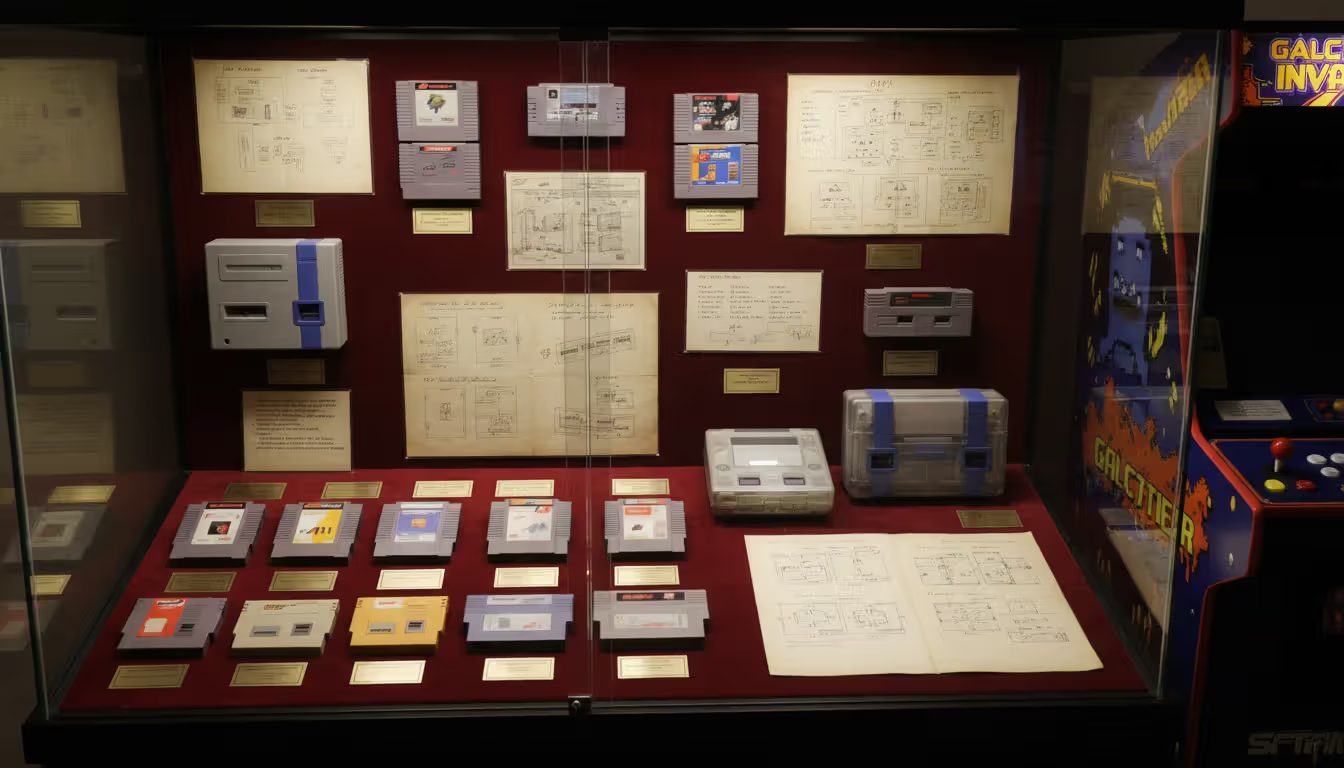
Gaming artifact collections encompass far more than just cartridges and consoles. Curators acquire development documents, concept art, promotional materials, tournament records, and even source code. Some institutions house prototype hardware that developers abandoned before commercial release, providing insight into alternate timelines of gaming history. The Atari 2600 prototype units at certain museums, for example, reveal design decisions that shaped home console gaming for decades.
Video game preservation efforts face unique challenges compared to other media. Unlike books or films, games require specific hardware to function. A Nintendo Entertainment System cartridge becomes useless without a working console, and many original systems have degraded beyond repair. Museums combat this through multiple strategies: maintaining working hardware, creating software emulations, and partnering with rights holders to legally preserve titles before they become unplayable.
The cultural importance extends beyond nostalgia. Video games represent significant technological achievements, artistic expression, and social phenomena. They've influenced everything from military training simulations to medical education tools. Preserving this history helps future generations understand how interactive media shaped society, much like film archives document cinema's evolution.
Author: Jordan Kessler;
Source: okogames.site
Museums also serve as research hubs. Academics studying game design, computer science history, or cultural studies rely on these collections. A researcher examining how user interfaces evolved can compare dozens of console dashboard designs side-by-side. Developers creating new games often visit to study past innovations and avoid repeating historical mistakes.
Top Video Game Museums to Visit in the United States
The United States hosts several world-class institutions dedicated to gaming history, each offering distinct perspectives and collections. These museums balance preservation with public engagement, making them valuable destinations for families, researchers, and gaming enthusiasts.
The Strong National Museum of Play (Rochester, NY)
The Strong houses the International Center for the History of Electronic Games, the most comprehensive video game collection in the world. Their holdings exceed 100,000 items, including rare prototypes, promotional materials, and complete console libraries spanning five decades.
What sets The Strong apart is its gaming hall of fame—the World Video Game Hall of Fame—which annually inducts influential titles. Past inductees include Super Mario Bros., Tetris, and Doom, selected by a panel of journalists, scholars, and industry veterans. The museum displays original arcade cabinets alongside modern installations, creating a timeline visitors can literally walk through.
Interactive game exhibitions here go beyond simple play stations. The museum reconstructs entire arcade environments, complete with period-appropriate carpeting, lighting, and sound design. Visitors don't just play Pac-Man—they experience the arcade culture of 1980. Special exhibits rotate quarterly, recently featuring deep dives into specific developers or gaming genres.
Admission costs approximately $18 for adults, with discounts for children and seniors. The museum requires several hours to explore properly, especially if you stop to play the numerous functional games throughout the exhibits.
Museum of Pop Culture (Seattle, WA)
Located in Seattle's shadow of tech giants, MoPOP approaches gaming as one element of broader pop culture. Their "Indie Game Revolution" exhibit showcases how independent developers transformed the industry, featuring playable builds and developer interviews.
The museum's architecture itself—a Frank Gehry design—creates an immersive environment. Gaming exhibits occupy dedicated galleries but connect thematically to music, science fiction, and horror displays. This cross-pollination helps visitors understand how games influenced and were influenced by other media.
MoPOP excels at temporary exhibitions. Recent installations examined specific franchises like The Legend of Zelda, displaying concept art, composer notes, and prototype gameplay. These deep dives attract both casual fans and hardcore collectors seeking rarely-seen materials.
General admission runs around $30 for adults, positioning MoPOP as a premium experience. The museum justifies this cost through high production values and frequent content updates. Photography is permitted in most areas, making it popular among social media enthusiasts.
The National Videogame Museum (Frisco, TX)
Author: Jordan Kessler;
Source: okogames.site
The National Videogame Museum in Frisco takes a distinctly hands-on approach. Nearly every exhibit includes playable elements, from vintage arcade cabinets to modern VR stations. The museum's philosophy prioritizes experience over passive observation.
One standout feature is their console timeline wall, displaying every major home system from the Magnavox Odyssey through current-generation hardware. Visitors can compare the physical evolution of controllers, seeing firsthand how ergonomics and button layouts changed. Many systems remain playable, allowing direct comparison between, say, the Sega Genesis and Super Nintendo.
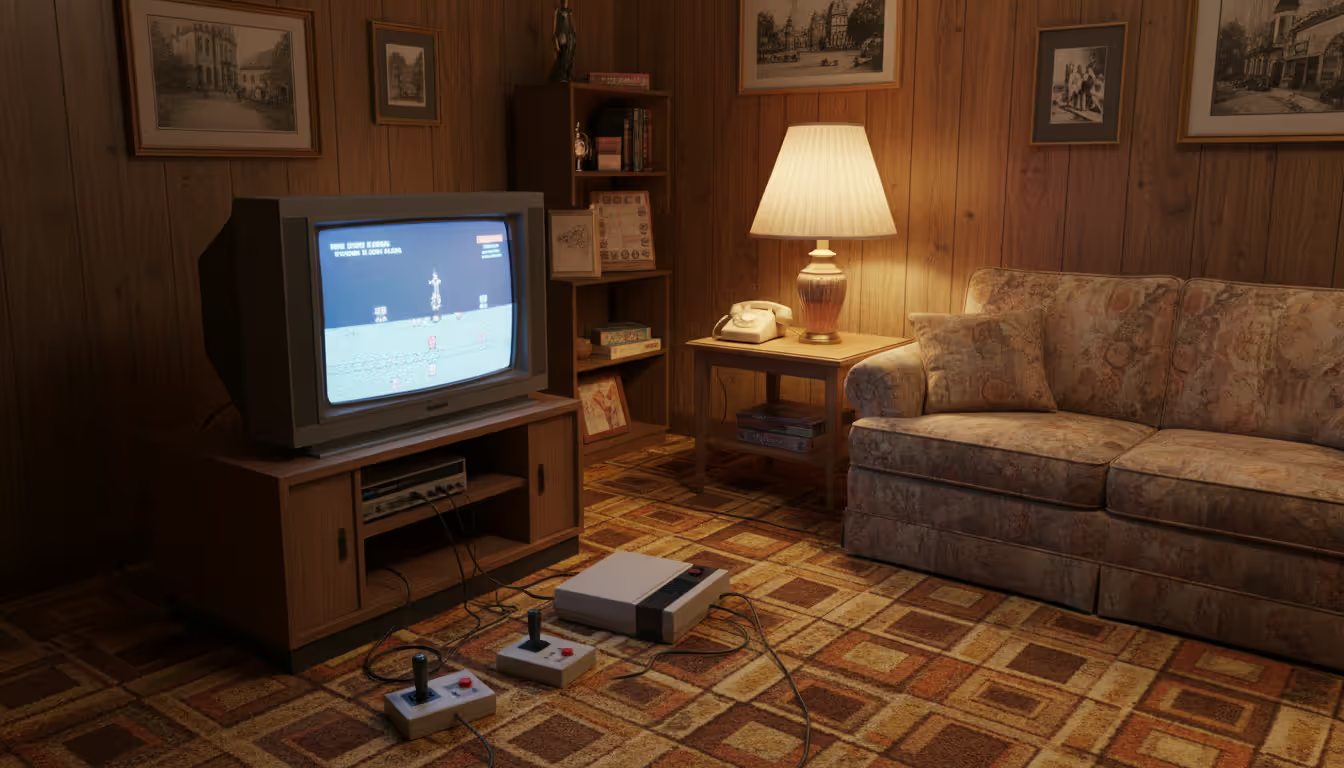
The museum also houses a recreation of a 1980s living room, complete with wood paneling and a CRT television connected to an Atari 2600. This environmental storytelling helps younger visitors understand the context in which their parents experienced gaming.
At roughly $15 for adults, the National Videogame Museum offers excellent value for families. The facility is smaller than The Strong but compensates through interactivity. Plan for 2-3 hours to properly explore and play through the exhibits.
Notable Gaming Museums Around the World
| Museum Name | Location | Admission Price Range | Key Highlights | Interactive Exhibits | Best For |
| The Strong National Museum of Play | Rochester, NY | $18-22 | World Video Game Hall of Fame, 100,000+ artifacts | Yes | Researchers, families, enthusiasts |
| Museum of Pop Culture | Seattle, WA | $30-35 | Indie Game Revolution, rotating franchise exhibits | Yes | Pop culture fans, photographers |
| The National Videogame Museum | Frisco, TX | $12-15 | Fully playable exhibits, console timeline | Yes | Families, hands-on learners |
| Computerspielemuseum | Berlin, Germany | €9-12 | European gaming history, PainStation exhibit | Yes | International travelers, European gaming history |
| The National Videogame Museum | Sheffield, UK | £8-10 | British gaming industry focus, Rare Ltd. materials | Limited | Industry historians, British gaming fans |
| Japan Game Museum | Kyoto, Japan | ¥1,000-1,500 | Nintendo history, arcade golden age | Yes | Japanese gaming enthusiasts, Nintendo fans |
International gaming history museums explained: European institutions often emphasize regional gaming industries. The Computerspielemuseum in Berlin, for instance, dedicates significant space to East German computer gaming, a niche subject rarely covered elsewhere. Their collection includes propaganda games created by the GDR government, offering unique historical perspective.
The National Videogame Museum in Sheffield focuses on Britain's contributions to gaming, particularly the 8-bit computer era. Machines like the ZX Spectrum and BBC Micro dominated UK homes while Americans played consoles. This regional difference created distinct gaming cultures, and Sheffield's museum preserves that British perspective.
Japan's various gaming museums naturally emphasize the country's outsized influence. Kyoto hosts multiple small museums near Nintendo's headquarters, some officially affiliated with the company. These institutions display prototype hardware, rejected game concepts, and materials from legendary designers like Shigeru Miyamoto.
For US travelers, European museums offer accessible destinations when combined with broader trips. Berlin and Sheffield both feature English-language materials and sit near major tourist attractions. Japanese museums require more planning but reward visitors with artifacts unavailable elsewhere.
What to Expect During Your Museum Visit
Retro gaming museums blend traditional exhibit design with interactive elements, creating experiences that differ significantly from art or history museums. Understanding what to expect helps visitors maximize their time and enjoyment.
Most museums organize exhibits chronologically, starting with early arcade games and progressing through console generations. This timeline approach helps visitors understand technological progression—how sprites evolved into polygons, or how online multiplayer emerged from local split-screen play. The Strong, for example, walks visitors through decades of innovation, with each era represented by both hardware and cultural context.
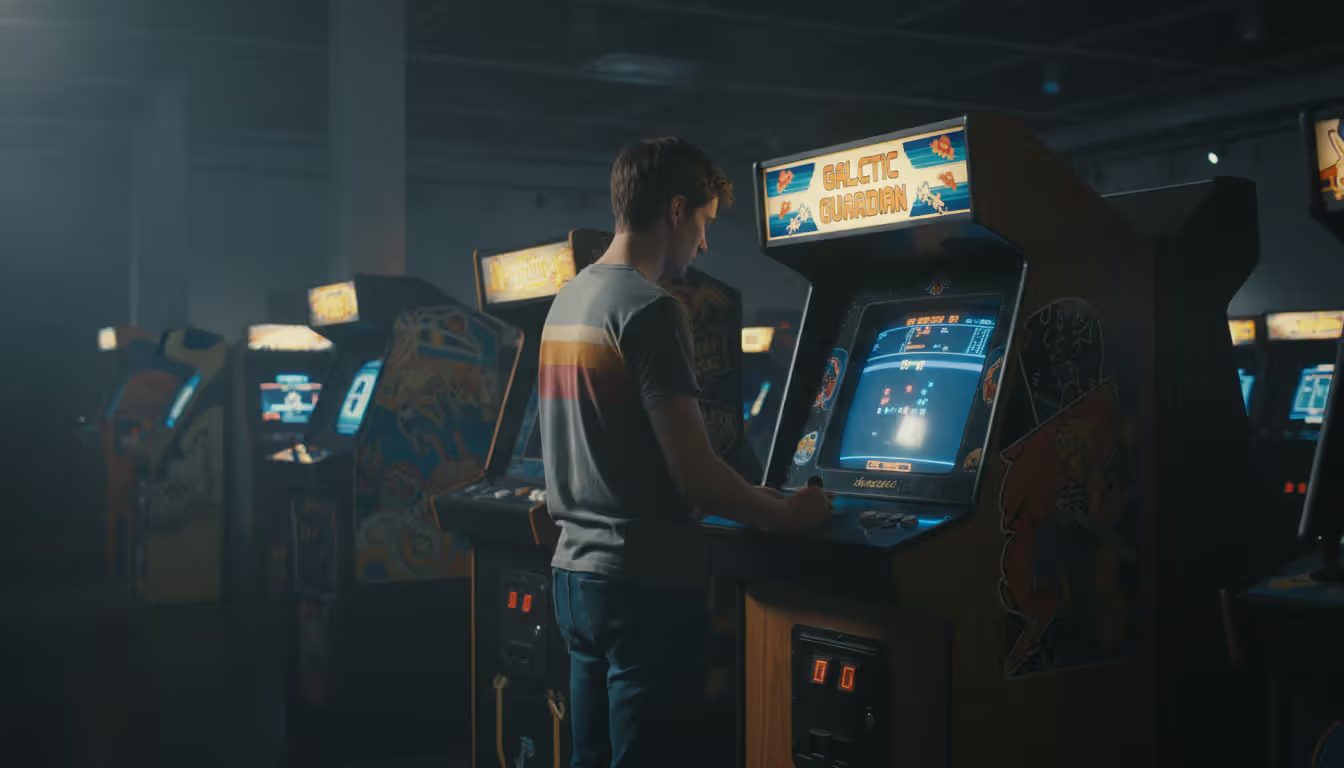
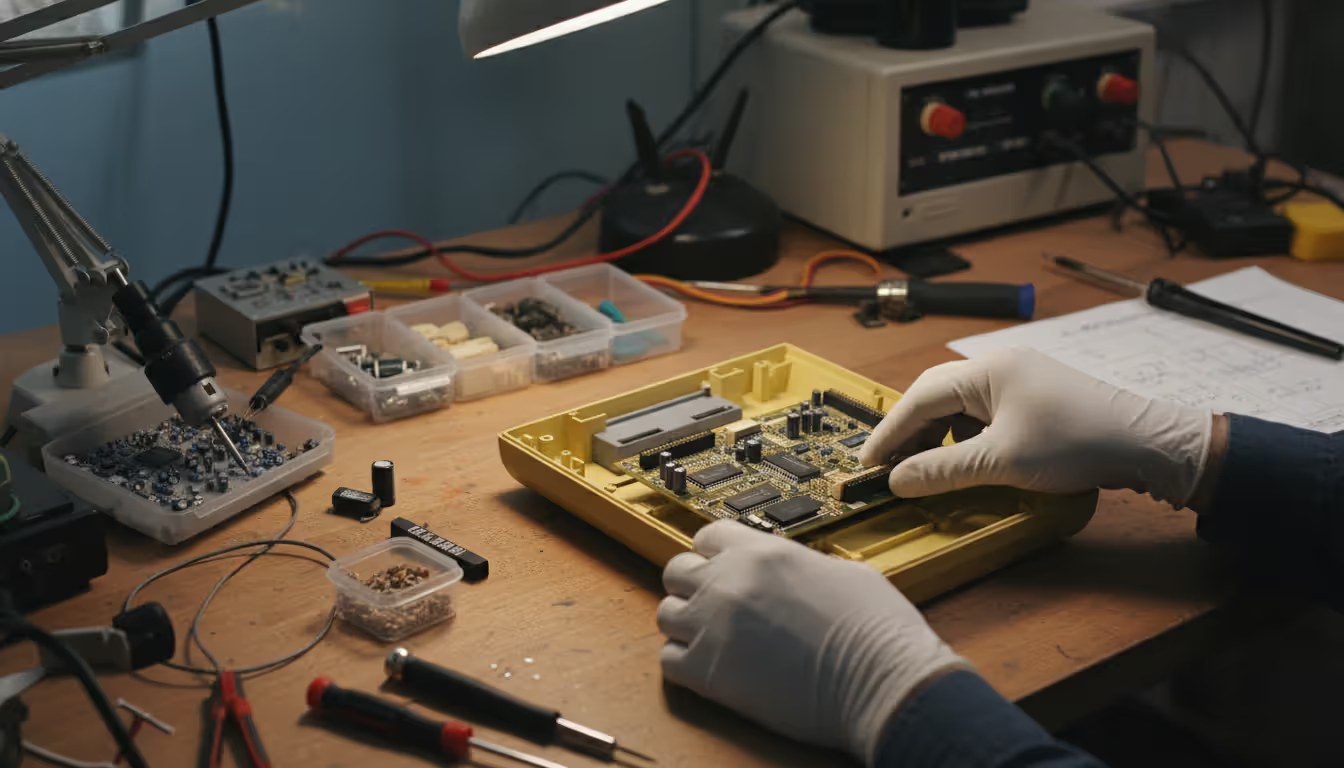
Interactive game exhibitions form the core attraction. Museums maintain working arcade cabinets, often original units from the 1970s and 1980s. These machines require constant maintenance; museums employ specialized technicians who repair aging circuit boards and replace worn components. When you play Donkey Kong on a 1981 cabinet, you're experiencing authentic hardware, not emulation.
Author: Jordan Kessler;
Source: okogames.site
Console displays typically include both static and playable elements. A museum might showcase every PlayStation model behind glass while offering working PS1 stations loaded with classic titles. This balance preserves rare items while letting visitors engage directly with gaming history. Expect to wait for popular stations—Street Fighter II cabinets often draw crowds.
Developer interviews and documentary materials provide context. Video stations feature designers discussing their creative processes, explaining how technical limitations sparked innovation. Learning that Super Mario Bros. used the same cloud and bush sprite (just recolored) helps visitors appreciate how early developers maximized limited memory.
Special collections rotate regularly. Museums acquire entire personal collections from industry veterans, developers' archives, or defunct companies' warehouses. A current exhibit might focus on a specific publisher, genre, or technological innovation. The Strong recently displayed materials from the E3 trade show's history, including press kits and promotional items never intended for public viewing.
Photography policies vary but generally permit personal photos without flash. Museums prohibit commercial photography without prior arrangement. Some temporary exhibits restrict photography entirely to protect loan agreements with private collectors or companies.
Expect to spend 2-5 hours depending on the museum's size and your engagement level. Completionists who play every available game need significantly more time. Families with young children should plan for shorter visits with breaks—even gaming museums can overwhelm small kids after a couple hours.
How Video Game Museums Preserve Gaming History
Video game preservation efforts require specialized knowledge and resources. Unlike preserving paintings or documents, maintaining playable games demands functioning hardware, compatible software, and often proprietary knowledge about systems no longer in production.
Physical degradation poses the primary challenge. Cartridge batteries that maintained save files have died in thousands of games. Floppy disks demagnetize over time, rendering data unreadable. CD-based games suffer from disc rot, a chemical breakdown that destroys the reflective layer storing data. Museums combat this through climate-controlled storage, careful handling, and creating backup copies before originals deteriorate further.
Digitization offers partial solutions but introduces legal complications. Copyright law doesn't provide clear exemptions for preserving abandoned games—titles no longer sold but still technically protected. Museums work with rights holders to obtain preservation permissions, though many companies have dissolved or been acquired multiple times, making copyright ownership unclear.
Author: Jordan Kessler;
Source: okogames.site
Partnerships with developers provide crucial access. When a studio closes, museums negotiate to acquire development materials before they're discarded. These archives include design documents, source code, and prototype builds that reveal how games evolved during production. The Strong recently preserved materials from several defunct studios, ensuring their contributions to gaming history survive.
Gaming artifact collections extend beyond finished products. Museums seek promotional materials, magazine advertisements, strategy guides, and tournament records. These items document how games were marketed and received, providing cultural context. A pristine copy of E.T. the Extra-Terrestrial for Atari 2600 means little without understanding its notorious commercial failure and subsequent burial in a New Mexico landfill.
Hardware preservation requires particular expertise. Original circuit boards fail over time, and replacement components often don't exist. Museums employ electrical engineers who fabricate custom parts or design modern equivalents that maintain authentic functionality. Some institutions create detailed schematics of rare hardware, ensuring future repairs remain possible even if original parts become unavailable.
Emulation serves as a backup preservation strategy. By recreating hardware behavior in software, museums ensure games remain playable even after physical systems fail completely. However, emulation isn't perfect—subtle differences in timing or graphics rendering can alter the experience. Purists argue that playing Super Mario Bros. on emulation differs from original NES hardware, and they're technically correct.
The gaming hall of fame concept extends preservation into cultural recognition. By inducting influential titles, museums encourage rights holders to maintain those games' availability. Hall of fame status often prompts re-releases or remasters, introducing classic games to new audiences while generating revenue that funds further preservation.
Video games represent the first truly interactive mass medium, and losing that history would be catastrophic for understanding 21st-century culture. We're not just preserving entertainment—we're documenting how millions of people learned problem-solving, experienced storytelling, and connected with others worldwide. Future historians will study gaming the way we study theater or cinema, and museums ensure that research remains possible
— Dr. Rachel Thompson
Planning Your Visit: Tips and Practical Information
Visiting a video game museum requires different preparation than traditional museums. These practical considerations help ensure an enjoyable experience.
Ticket prices vary significantly by institution. Smaller museums charge $10-15 for adults, while larger facilities like MoPOP approach $35. Many offer family packages that reduce per-person costs. Annual memberships make sense for locals or frequent visitors—The Strong's membership pays for itself after three visits.
Best times to visit depend on your priorities. Weekday mornings offer minimal crowds, letting you play popular games without waiting. However, museums feel most energetic during weekends when families and enthusiasts fill the space. Some visitors prefer that bustling atmosphere, especially for competitive arcade games where watching skilled players provides entertainment.
Family-friendly aspects make these museums excellent for children, but set realistic expectations. Kids under six may lack the motor skills for complex games and won't appreciate historical context. Most museums provide simplified games or dedicated children's areas. The Strong excels here, offering age-appropriate activities alongside serious preservation work.
Photography policies generally permit personal photos for social media and memories. Museums prohibit flash photography near sensitive displays and restrict video recording of playable games—partly to prevent spoiling puzzle solutions, partly to manage bandwidth if you're streaming. Always check posted policies or ask staff before photographing.
Gift shops stock reproduction merchandise, books about gaming history, and occasionally rare collectibles. Prices typically match online retailers, but you're supporting the museum's preservation work. The Strong's shop offers exclusive items unavailable elsewhere, including prints of rare promotional art from their archives.
Duration planning matters more than at traditional museums. If you intend to play games, budget extra time—a single multiplayer session can consume 30 minutes. Serious enthusiasts should consider multiple visits rather than rushing through everything in one marathon session.
Accessibility has improved significantly. Most museums provide wheelchair access to all exhibits, though some vintage arcade cabinets sit at fixed heights that may challenge certain visitors. Staff can usually accommodate special needs with advance notice. Sensory considerations matter too—arcade floors get loud, with multiple games playing simultaneously. Visitors sensitive to flashing lights should ask about potentially problematic exhibits.
Parking and public transit access vary by location. The National Videogame Museum in Frisco sits in a suburban area requiring a car. MoPOP in Seattle offers excellent public transit connections and sits near other attractions, making it easy to combine with broader sightseeing.
Membership reciprocity sometimes applies. If you belong to other museums, check whether reciprocal agreements offer discounted admission. Some science museums include gaming exhibits and participate in networks that reduce costs for members.
Plan around special events. Museums host tournaments, developer talks, and themed nights that enhance the experience. The Strong occasionally offers after-hours adult events with beverages and unrestricted play time. These events require separate tickets but provide unique experiences unavailable during regular hours.
Frequently Asked Questions About Video Game Museums
Video game museums serve a crucial role in preserving interactive entertainment history while providing engaging experiences for visitors of all ages. Whether you're exploring The Strong's comprehensive collection in Rochester, experiencing Seattle's pop culture approach at MoPOP, or enjoying hands-on exhibits in Frisco, these institutions offer perspectives on gaming's evolution that no book or documentary can match.
The best video game museums worldwide continue expanding their collections and exhibits as gaming technology advances. What began as grassroots efforts by dedicated collectors has matured into professional institutions recognized for their cultural importance. By visiting these museums, you support preservation efforts that ensure future generations can experience and study gaming history.
Plan your visit around your interests—whether that's playing vintage arcade games, studying console evolution, or understanding gaming's cultural impact. Each museum offers distinct strengths, and many gaming enthusiasts find value in visiting multiple institutions to gain comprehensive perspectives. The artifacts preserved today will help tomorrow's historians understand how interactive media transformed entertainment, education, and social connection.